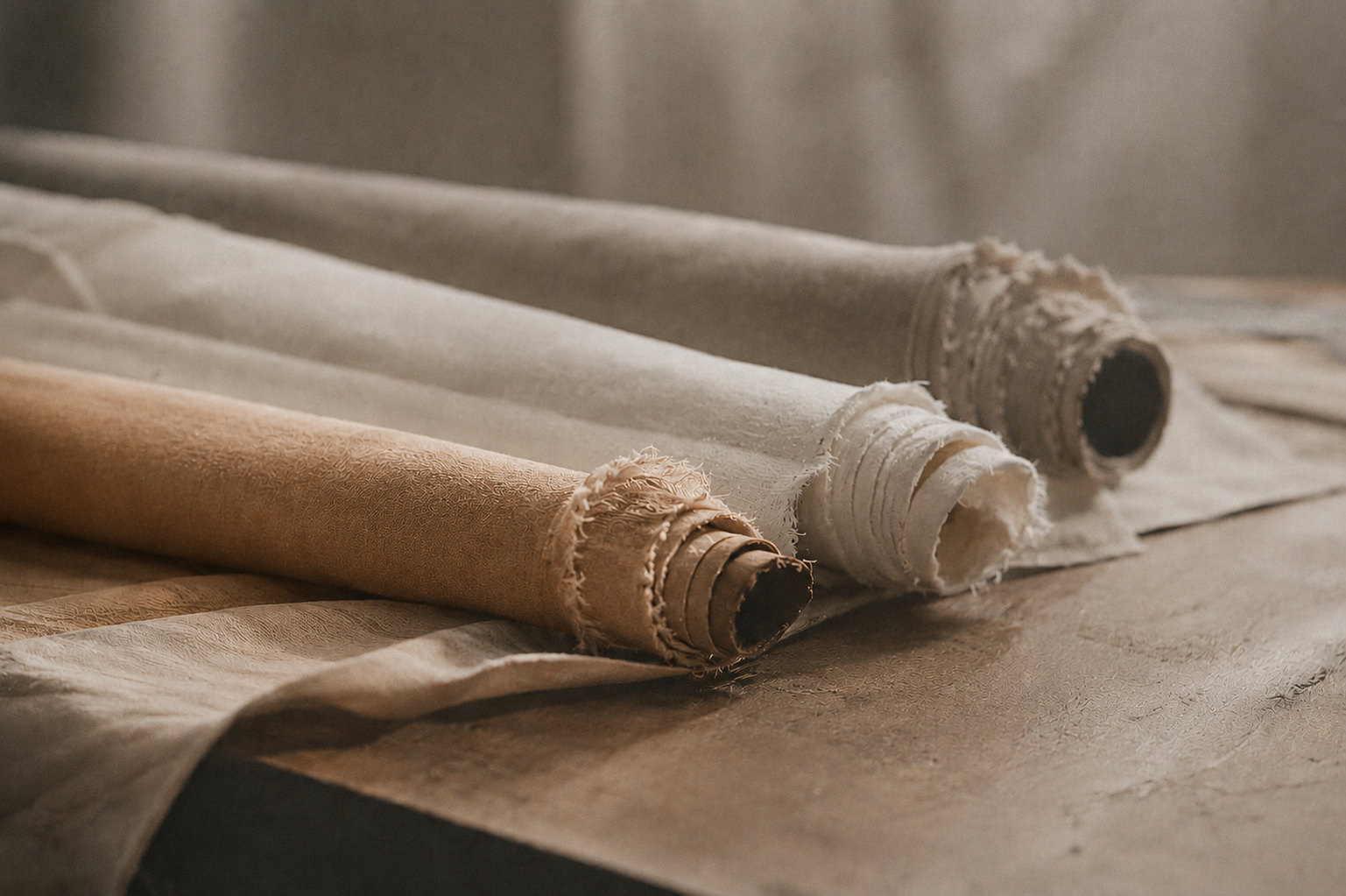
The standard advice given to emerging designers about fabric sourcing is to wait until your volumes are large enough to access good mills. This advice is wrong, or at least incomplete. Small volumes require more creativity in how you access quality materials — but they do not require you to accept inferior ones.
Here is how to approach premium fabric sourcing when your order quantities are modest.
Understand Why MOQs Exist
Minimum order quantities are not arbitrary. They exist because mills need to set up looms, prepare dye baths, and allocate production time. A short run costs the mill almost as much in setup as a long run — but generates significantly less revenue. The MOQ is the mill’s calculation of the minimum volume that makes a production run economically rational.
Knowing this helps you understand what you’re actually negotiating when you push for a lower minimum. You’re asking the mill to accept a worse return on its setup costs. That’s possible — but it usually requires either a premium price per meter, an established relationship, or access through an agent who brings enough combined volume from multiple clients to make the economics work.
Work With an Agent Who Consolidates Volume
This is the most reliable path to quality fabric at small quantities. A sourcing agent with established relationships at a mill brings consolidated volume — multiple small clients whose orders together meet or exceed the mill’s preferred minimums. In exchange, the mill offers access at lower individual quantities than it would consider from a direct approach.
The key is finding an agent who actually has these relationships, as opposed to one who acts as a middleman for whatever is easily available. Ask the agent directly: which mills do you have ongoing relationships with? Can you describe the production process for a specific fabric? How long have you been working with your primary silk or cashmere suppliers?
Be Flexible on Color
Custom colorways require separate dye runs, which drive up minimum requirements significantly. If you can work in a mill’s existing color palette — or in greige fabric that you dye independently — your accessible minimums drop substantially. Many of the finest woven fabrics are available in a curated range of stock colors at lower minimums than any custom color could achieve.
Consider building your palette around what quality mills actually produce in volume, rather than specifying colors that require bespoke runs your quantities can’t justify.
Consider Multi-Season Commitments
If you are working with a fabric you intend to use across multiple collections, communicate that to the supplier from the beginning. A commitment to purchase 50 meters per season for two years is a more interesting proposition to a mill than a single 50-meter order. It doesn’t lock you in legally, but it signals seriousness and gives the supplier a reason to accommodate you.
Be Selective About What You Source at Premium
Not every fabric in a collection needs to come from the same level of the supply chain. Identify the one or two materials in your range that most define the garment’s quality perception and invest your sourcing effort there. A customer who holds a cashmere jacket immediately knows whether the fiber is exceptional. The lining they don’t touch in the same way. Allocate your sourcing budget and your minimum volumes accordingly.
Start With Stock Fabrics
Most premium mills maintain a stock program — fabrics produced in standard constructions and colors, held in inventory, available in quantities as low as 30–50 meters. These are not seconds or discontinued lines. They are the mill’s core offer, produced in volume and available immediately. Starting a supplier relationship with a stock fabric order is a legitimate and professional approach that many established designers use even when they have the volume for custom production.
Accept That Quality Has a Floor
There is a volume below which certain fabrics simply are not accessible — not because the industry is unfair, but because producing them responsibly requires a minimum scale. A genuine Grade A cashmere in a complex jacquard weave may require 100 meters to produce. Below that, the economics don’t work for the mill at any price.
Knowing where those floors are — and which compromises are worth making and which aren’t — is part of developing the material literacy that separates designers who build lasting reputations for quality from those who don’t.
Small volumes are a constraint. They are not a barrier to working with exceptional materials — provided you approach the sourcing process with the same seriousness the materials deserve.
Questions about a fabric you’re currently evaluating? Write to us at info@AltaSeta-Fabrics.com — we’re glad to help you think through what to test and what to look for.