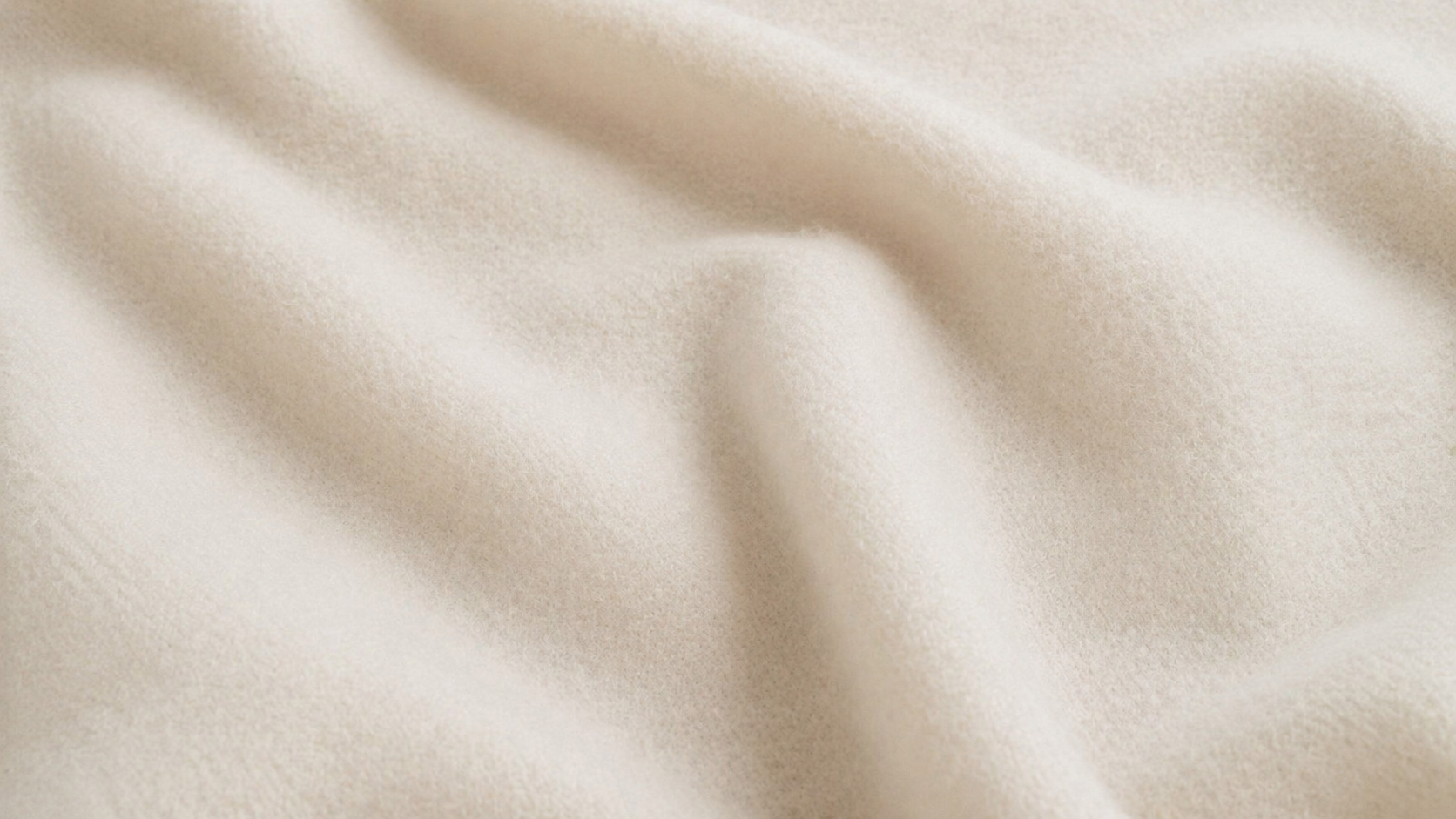
Cashmere is the most commercially abused word in fashion textiles. It appears on labels attached to garments that retail for $40 and on those that retail for $4,000. It is used to describe fiber that comes from the soft undercoat of Capra hircus goats, and it is used to describe blends that contain as little as 3% of that fiber alongside wool, acrylic, or recycled content. The word itself has lost almost all technical meaning in the market — and the people who pay for it are the designers and consumers who believed it meant something.
Here is what cashmere actually is, and how to tell the difference.
The Fiber
True cashmere comes from the undercoat of the cashmere goat, combed once a year during spring molting season. The quality of that fiber is determined almost entirely by diameter, measured in microns. The finer the fiber, the softer and more valuable the cashmere.
Grade A: 14.5–15.5 microns — the finest, softest, most durable. This is what luxury brands specify.
Grade B: 15.5–16.5 microns — still high quality, noticeably softer than most commercial cashmere.
Grade C: 16.5–19 microns — this is the majority of what the mass market sells as cashmere.
Above 19 microns, a fiber may technically qualify as cashmere under some classifications but will feel nothing like the material its name implies. It pills quickly, loses its softness after a few washes, and is indistinguishable from mid-grade wool to most hands.
Where It Comes From
The three primary cashmere-producing regions are Inner Mongolia, Mongolia, and Iran. Inner Mongolian cashmere — particularly from the Alashan and Ordos regions — is widely considered the finest in the world due to climate conditions that produce longer, finer fiber. The extreme temperature variation forces the goats to develop a particularly dense, soft undercoat.
Chinese mills have dominated cashmere processing for decades, and the best of them have developed spinning, weaving, and finishing capabilities that match or exceed anything available in Italy or Scotland. The problem is that the worst of them also exist — and they are far more numerous.
The Blending Problem
There is no reliable way to detect cashmere content by touch above approximately 15% blend ratio. Below that, and the hand feel is driven by whatever else is in the fabric — wool, viscose, or synthetic fiber. Laboratory fiber analysis can identify the presence and approximate proportion of cashmere, but this testing is rarely demanded by buyers and almost never conducted at the retail or mid-market level.
This is how a fabric labeled “cashmere blend” can legally contain 7% cashmere and 93% wool. It is how “cashmere touch” and “cashmere-like” have become marketing categories. It is why the word, without a specification behind it, means nothing.
What to Ask Your Supplier
When sourcing cashmere, these are the specifications you need in writing, not just in conversation:
- Fiber diameter in microns
- Grade classification (A, B, or C)
- Region of origin
- Whether the fiber is single-ply or blended, and if blended, the exact ratio
- Whether the processing (spinning and weaving) is done in-house or subcontracted
If a supplier can’t answer these questions specifically, they either don’t know or don’t want you to know. Neither is acceptable when you’re putting a cashmere label on a garment.
The Price Signal
Genuine Grade A cashmere fabric does not come cheap. As of 2026, fine woven cashmere in a standard suiting weight starts at $80–120 per meter at reasonable minimums and increases significantly for finer weaves, specialized constructions, or custom colors. If you’re being offered something called cashmere at $25/meter with no MOQ and a two-week lead time, the fiber diameter on that fabric is not 15 microns.
This doesn’t mean expensive cashmere is automatically good. It means cheap cashmere is almost certainly not what it claims to be. Price is not a guarantee of quality — but below a certain floor, quality is not possible.
The cashmere market rewards buyers who ask specific questions and penalizes those who don’t. Knowing what to ask is the only protection you have.
Questions about a fabric you’re currently evaluating? Write to us at info@AltaSeta-Fabrics.com — we’re glad to help you think through what to test and what to look for.