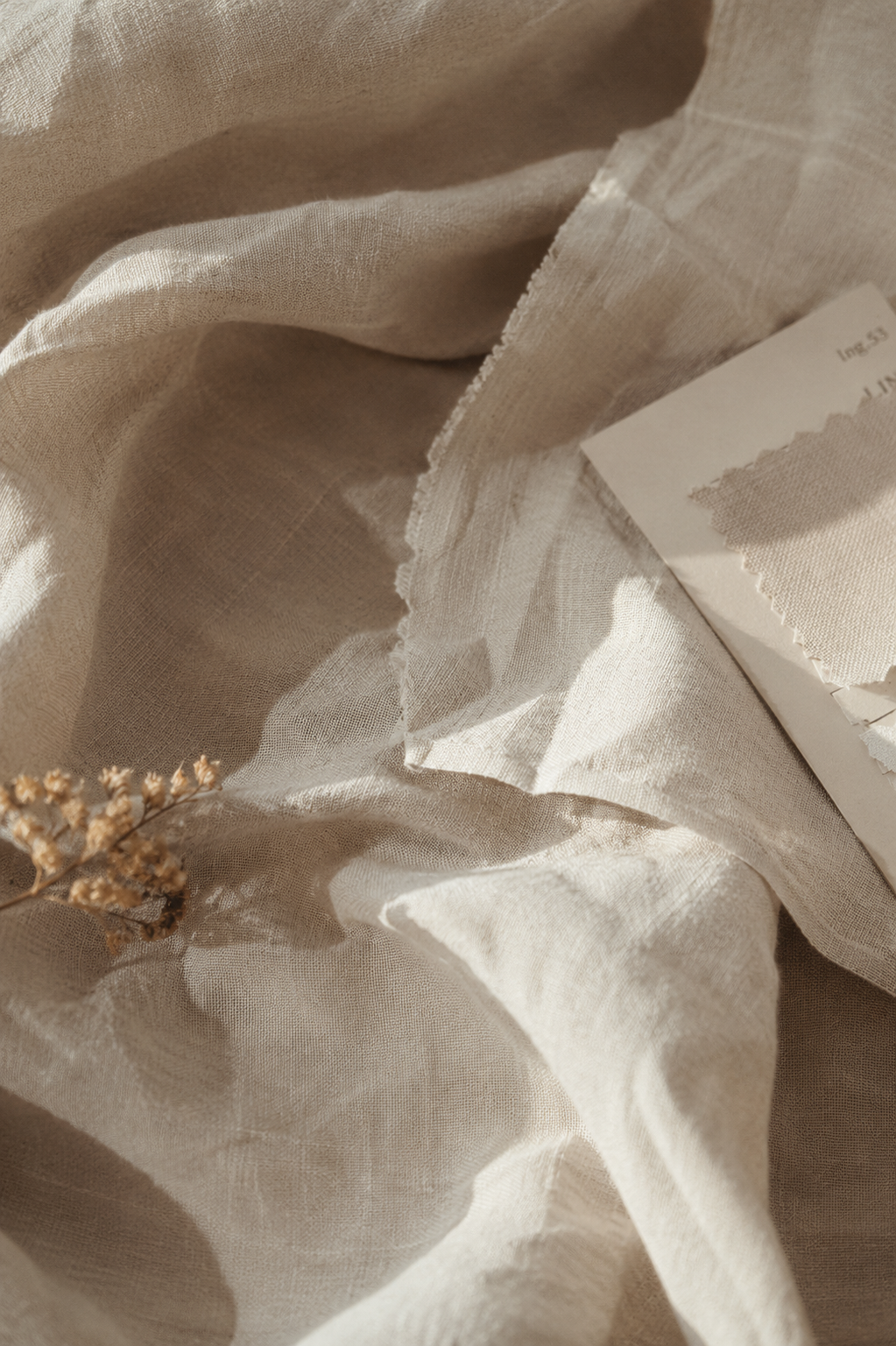
Linen is not a new material. It is one of the oldest textile fibers in human history. But it is experiencing something genuinely new: a sustained elevation from its traditional associations — summer basics, rustic textures, casual separates — into luxury ready-to-wear, fine tailoring, and even eveningwear. Understanding why this is happening, and what it means for sourcing, requires looking at both the demand side and the supply side of the material.
Why Linen Now
Several forces have converged to make linen relevant across a broader range of fashion contexts than it previously occupied.
Consumer preference for natural fibers has accelerated, particularly in markets where sustainability messaging has shifted from niche to mainstream. Linen’s credentials in this regard are genuine: flax requires significantly less water than cotton to grow, can be cultivated without irrigation in temperate climates, and produces a fiber that biodegrades fully at end of life.
The hand feel of linen has also been transformed by processing technology. Traditional linen was stiff, prone to harsh wrinkling, and difficult to wear next to skin. Modern enzyme treatments, mechanical softening, and blending with silk or cashmere have produced linens that drape fluidly, soften with washing, and bear almost no resemblance to the fabric of two decades ago. A well-finished contemporary linen can be indistinguishable from a fine plain-weave cotton in terms of comfort while offering superior breathability and a surface character that is distinctively its own.
The Fiber Geography
Flax — the plant from which linen is produced — grows best in a narrow band of temperate climate: Belgium, France, and the Netherlands in Western Europe, and to some extent Russia and China. Belgian and French flax is widely considered the finest in the world, producing long-staple fiber with excellent fineness and strength. This fiber is processed into linen across multiple countries, with China being the largest single processor.
Chinese mills processing European-origin flax produce fabrics that can be indistinguishable from those produced in European mills — at meaningfully lower cost. The distinction that matters is fiber origin, not the location of weaving. A fabric woven in China from Belgian long-staple flax is a high-quality linen. A fabric woven anywhere from short-staple Chinese domestic flax is a different material.
When sourcing linen from China, always ask about fiber origin. Reputable mills will specify European flax without hesitation. Mills that are vague about origin are often using domestic fiber.
Linen Constructions Worth Knowing
Lightweight shirting linens (80–120 GSM) represent the most technically demanding end of the category — achieving a fine, even surface in a fiber that is inherently irregular requires high-quality fiber and careful spinning. These fabrics work for blouses, light dresses, and linings where natural texture is welcome but heaviness is not.
Mid-weight linens (150–230 GSM) are the workhorses of linen tailoring — structured enough for trousers and unlined jackets, fluid enough for wide-leg cuts and relaxed silhouettes. The surface texture in this weight range is where linen’s distinctive character is most visible.
Linen-silk blends (typically 55% linen / 45% silk) represent a significant step forward in luxury positioning. The silk improves drape and reduces wrinkling while the linen contributes structure and natural surface irregularity. These fabrics occupy a different market tier than pure linen and open the material to occasions where untreated linen would have been inappropriate.
The Sourcing Reality
The best linen mills in China work primarily with European luxury brands and have lead times and minimums that reflect their position in the market. They are not easily accessible without an established relationship. They do not advertise widely.
The linen market also contains a significant volume of fabric that has been treated with synthetic sizing or softeners to simulate the hand feel of well-processed natural linen. This treatment washes out after a few cycles, leaving a fabric that behaves quite differently from what it felt like in the sample stage. Testing samples through at least two wash cycles before committing to production is not optional.
Linen sourced well is one of the most interesting materials to work with in contemporary fashion. Linen sourced carelessly is one of the most disappointing. The difference comes down to fiber origin, processing quality, and the relationship between buyer and mill.
Questions about a fabric you’re currently evaluating? Write to us at info@AltaSeta-Fabrics.com — we’re glad to help you think through what to test and what to look for.